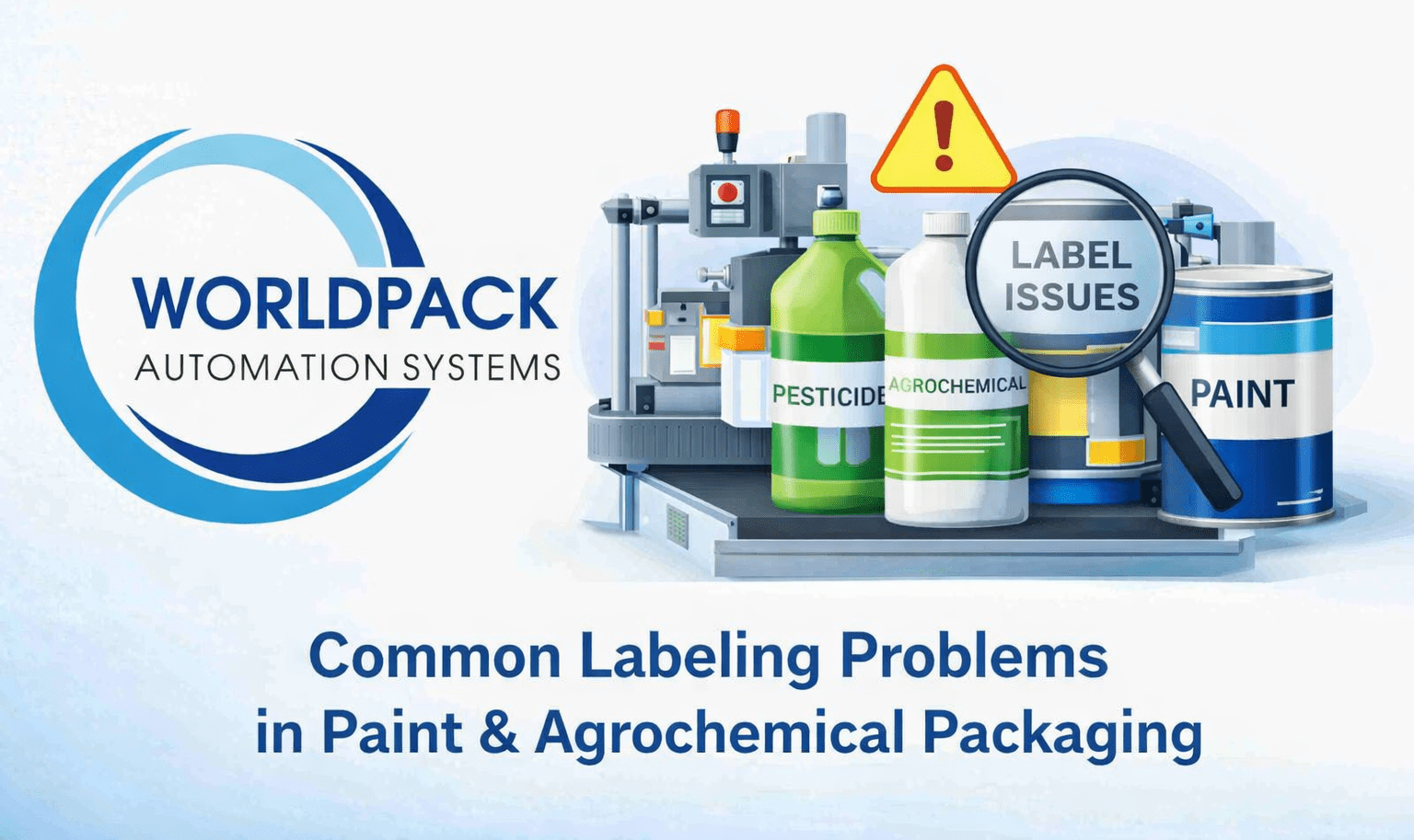
In industries like Paint, Lubricants, Agrochemicals, Pesticides, and Chemicals, labelling is not only about product appearance. It is a key factor for:
- Compliance and safety information.
- Batch and product identification.
- Retail and export acceptance.
- Brand trust and customer confidence.
However, many manufacturers face repeated labelling issues that lead to rejection, wastage, and production downtime.
Below are the top 7 most common labelling problems in Paint, Lubricants & Agrochemical Packaging these industries and practical ways to solve them.
1) Label Misalignment (Crooked Label Placement)
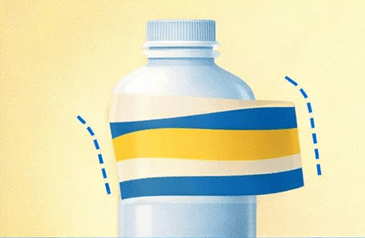
Why it happens:
- Uneven container surface (HDPE, PET, tin containers)
- Improper container guiding.
- Incorrect sensor detection or speed mismatch.
How to fix it:
- Use accurate sensors and a proper centering system.
- Ensure correct conveyor speed and stable bottle movement by guide.
- Calibrate the machine as per container size and label roll.
2) Wrinkles, Air Bubbles, or Folded Labels
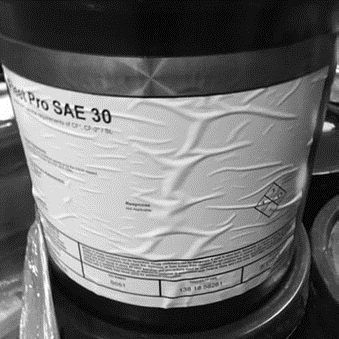
Why it happens:
- Weak pressing roller system.
- Wrong label material selection.
- Dust, oil, or moisture on the container surface.
How to fix it:
- Use strong pressing rollers for uniform pressure.
- Clean containers before labelling.
- Choose the correct label material for chemical packaging.
3) Label Not Sticking Properly
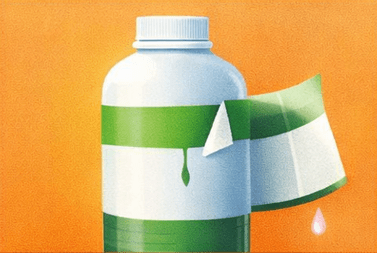
Why it happens:
- Low-quality adhesive.
- Moisture on container surface.
- Oil or chemical residue.
How to fix it:
- Use industrial-grade adhesive labels suitable for chemicals.
- Add air blower or cleaning system before labelling.
- Store labels in a dry and controlled environment.
4) Label Overlapping (Wrong Wrap Position)
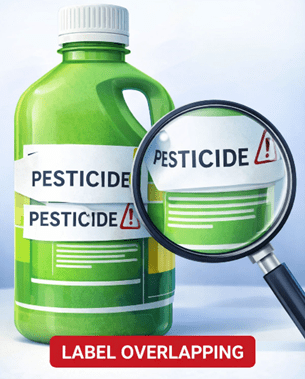
Why it happens:
- Incorrect label length settings.
- Container slippage.
- Conveyor and dispensing speed mismatch.
How to fix it:
- Use servo motor control for precise dispensing.
- Maintain stable conveyor speed.
- Use bottle holding belt system for stability.
5) Unscannable / Unreadable Message Due to Wrinkles on Printed Labels
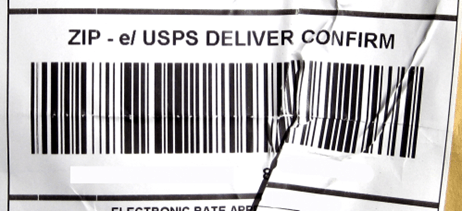
Why it happens:
- Wrinkles on the label after application.
- Uneven roller pressure or incorrect label tension.
- Dust, oil, or moisture on the container surface.
How to fix it:
- Ensure smooth label application with proper roller pressure.
- Maintain correct label tension and stable machine speed.
- Clean containers before labelling and use suitable label material.
6) Absence / Presence Labels or Incorrect Label Detection
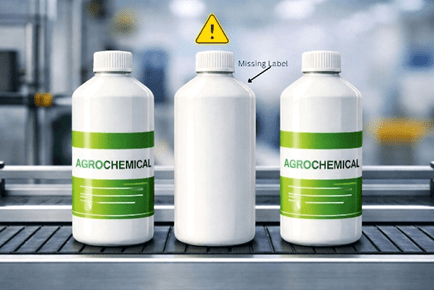
Why it happens:
- Poor sensor quality.
- Transparent label sensing issues.
- Incorrect gap detection.
How to fix it:
- Use high-quality sensors and proper calibration.
- Ensure support for transparent label sensing if needed.
- Perform regular cleaning and preventive maintenance.
7) Security Label Problems (Hologram / Tamper Evident Label Issues)
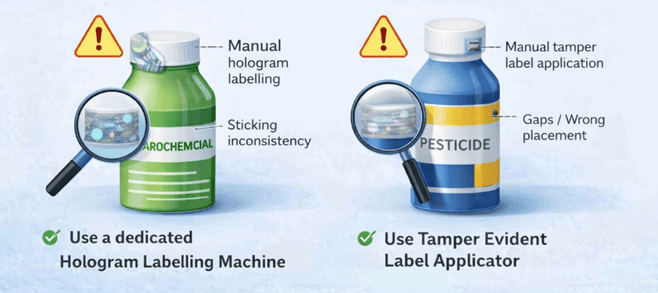
This is increasingly common in agrochemical and pesticide packaging where brands want protection against:
- Duplicate products
- Fake packaging
- Illegal refilling
Why it happens:
- Manual hologram sticking leads to inconsistency.
- Incorrect applicator setup.
- Lack of automation for security labels.
How to fix it:
- Use a dedicated hologram labelling or security label applicator.
- Ensure consistent placement and proper alignment.
- Automate tamper-evident label application for accuracy.
Machine Types Commonly Used in Paint & Agrochemical Packaging
Depending on container type and labelling requirement, industries commonly use:
Wrap Around Labelling Machine
Used for round bottles, HDPE chemical bottles, and cylindrical containers.
Front & Back Labelling Machine
Used for flat, square, and rectangular bottles where two labels are required.
Top Labelling Machine
Used for cartons, boxes, caps, pouches, and top-surface labelling.
Top & Bottom Labelling Machine
Used for boxes, trays, cartons, and packaged products requiring both-side labelling.
Hologram / Security Label Applicator
Used for tamper-proof, anti-duplicate, and brand protection labelling.
Tamper Evident Labelling Machine
Used for tamper-evident sealing labels on bottle caps, neck sleeves, or closure areas to prevent refilling and ensure product authenticity.
Final Thoughts
In paint and agrochemical industries, labelling is not just a packaging step. It is a critical quality checkpoint.
A reliable labelling system helps manufacturers achieve:
- Better production speed
- Reduced rejection and rework
- Consistent label accuracy
- Compliance-ready packaging
- Stronger brand trust